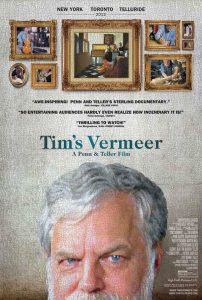
 “Tim’s Vermeer,” September 14, 2014 (2013), DVD. What makes a Vermeer a Vermeer? I hunted down as many as I could when I was in the Netherlands and in other European and American museums that claimed to possess one or more. I stood in front of them transfixed. They are special. Tim Jennison, an autodidact computer graphics innovator/inventor/mega-rich guy, but not an artist, wants to find out as well, although I’m not sure from the film if he loved them as much as I do. And Penn Gillette and Teller want to film it to know, because they love to debunk ‘truths’ and even more, to prove mystery to be scientifically, or in this case, technologically, explicable. Jennison stumbles on a way to reproduce the seemingly inexplicable aspects of Vermeer’s art (especially his use of light and tone) using lenses and mirrors, and he suggests Vermeer did the same thing. I found the process very interesting, Gillette very irritating (as he often is, even when I agree with him), and the film – that follows the many years of this experiment – both useful and misleading. They may be right, and artist David Hockney. and art historian `Phillip Steadman view this work as vindication of their theories. But historians of science have long argued for the seminal role of artists and other technologists and craftspeople, in technological and scientific change, especially between 1450 and 1700. A weak straw man that reflects more on a false dichotomy argued by some overly romantic artists/tech folks today than by most historians I know. To me, the paintings from the 17th century are still magical as I stand in front of them.