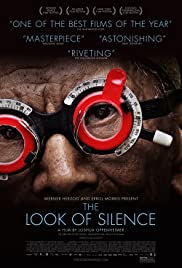
 “The Look of Silence,” May 8, 2016 (2014), documentary, DVD The second part of Joshua Oppenheimer’s look at the 19654 genocidal massacres of one million Communists and troublemakers of any sort that irritated the military or local thugs,. and Chinese Indonesians, this film brings Adi Rukun, the brother of one victim, Ramli Rukun, face to face with the men who tortured and murdered him. It also brings him face to face with their families. Adi is an optometrist who makes house calls, bringing vision to his patients. But these folks need to see much more than what’s before them now. Indeed, the film is about Indonesian’s refusal to look and face their past: some out of fear of being victimized, some out of fear of being punished or exposed. The past is past but not really, not ever until you confront it (and yes they do quote Faulkner). Families are forced to face their truths as both victims and perpetrators and sometimes both. Others simply refuse to think of it. The blood lust was everywhere and profoundly bestial. And we, sitting in theaters or in our homes, must also confront US (our) complicity in these events that lasted almost half a year. The film, after all, begins with a US news report documenting both the prisons and the massacres in the name of anticommunism and the interest of global capitalism. I remember hearing these things even as a 14-year old in Cleveland, Ohio. And we/I did nothing. The army officers who sponsored the coup and ruled the state, and whose allies still rule, were US allies rewarded with control over East Timor and the brutalization of their own populations even as they and their country fell deeper into debt to the economic hit men, like John Perkins, sent to construct golden chains of indebtedness. As the film makes clear, their butchery was matched by their venality as they stole their victim’s property, wealth, and sometimes their wives, and became leading families of wealth in their communities. If the film has a weakness, it is that in this personal story, the political is discussed but not the genocidal slaughter of almost ½ million Chinese which formed a distinctive portion of Indonesia’s commercial middle class. Still, this is a must see which, along with Oppenheimer’s first movie, “The Act of Killing,” makes this what may be the most powerful brace of documentaries produced in the past decade.